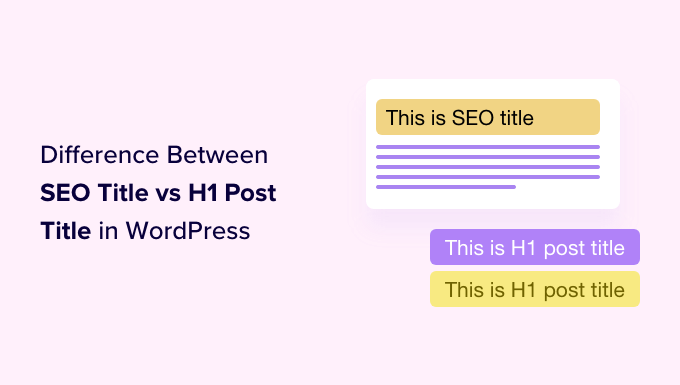
SEO Title vs H1 Post Title in WordPress: What‘s the Difference? (2026)
Did you know that WordPress posts and pages have two different types of titles, each with their own important purpose?
It‘s true! Understanding the difference between the SEO title and the H1 post title is crucial for optimizing your WordPress site‘s content for both search engines and readers.
As a WordPress expert, I‘m here to break down everything you need to know about these two title types and share my best tips for crafting titles that drive more organic traffic and engagement in 2026.
Why WordPress Titles Matter
First, let‘s put things in perspective with a few key statistics:
- WordPress powers over 43% of all websites on the internet (W3Techs)
- The title tag is the second most important on-page factor for SEO (Ahrefs)
- 8 out of 10 people will read your title, but only 2 out of 10 will read the rest (Copyblogger)
- Organic search results with emotionally triggered titles get 7% more clicks (Conductor)
So if you want your WordPress site to rank high in Google and attract organic visitors, you absolutely need to get your titles right. Even small tweaks to your titles can make a big difference in clicks, engagement, and conversions.
SEO Title vs H1 Post Title: What‘s the Difference?
Now, let‘s clarify the key differences between the two main types of titles in WordPress:
| SEO Title | H1 Post Title |
|---|---|
| Also called the title tag or meta title | Also called the heading or post title |
| Shows up in the | Shows up in thetag in page code |
| Displayed in search results and browser tabs | Displayed at top of post/page content |
| Influences search rankings and organic CTR | Helps structure and engage page content |
| Recommended length: 50-60 characters | Can be longer than 60 characters |
| Should include primary keyword | Should include keyword and be compelling |
| Set manually in SEO plugin settings | Set in WordPress post/page editor |
Here‘s an example of how the SEO title and H1 post title appear in different places:
[Screenshot of SEO title in Google SERP and H1 on actual page]As you can see, the SEO title is what searchers see in Google results, while the H1 post title is what visitors see when they land on your page. Ideally, you want to optimize both for their unique purposes.
How to Add SEO Titles in WordPress with AIOSEO
The easiest way to set SEO-optimized title tags in WordPress is with the All in One SEO (AIOSEO) plugin.
Once you have AIOSEO installed and activated, just follow these simple steps:
- Edit a post or page in WordPress
- Scroll down to the AIOSEO Settings box
- Click on the "Title" field under the "General" tab
- Enter your custom SEO title, keeping best practices in mind
- Preview how the title will look in Google search results
- Update the post or publish when finished
By default, AIOSEO will use your post title as the SEO title. But you can change this default format under Search Appearance » Content Types in the plugin settings.
For example, you might want to add your site name after the post title, or remove it altogether. AIOSEO gives you full control over your title tags.
SEO Title Format Best Practices for WordPress
To get the most SEO value from your WordPress title tags, it‘s important to follow these best practices:
- Aim for 50-60 characters in length to avoid truncation in search results
- Ahrefs found titles cut off after 60 characters in 92% of cases
- Use your focus keyword near the beginning of the title
- Studies show almost 100% of top-ranking pages use exact keyword matches in their titles
- Write in title case with engaging trigger words
- Titles with emotional or power words increased CTR by 7%
- Add numbers, questions or parentheses to stand out
- List posts got 2x more traffic and 2x more social shares (Conductor)
- Keep titles concise, descriptive and relevant to the content
- Google rewrites irrelevant titles over 60% of the time
- Use AIOSEO‘s built-in Headline Analyzer for optimized suggestions
- The analyzer tool scores your title on a 0-100 scale for SEO, sentiment, length and more
To see the Headline Analyzer in action, just click on the "Title" field while editing your post in AIOSEO. You‘ll get an instant optimization score along with tips for improving your title:
[Screenshot of AIOSEO Headline Analyzer]When to Use a Different SEO Title Than Your H1 Post Title
In most cases, it‘s fine to keep your SEO title and H1 post title the same. However, there are times when you may want to differentiate them for SEO or engagement purposes:
- If your post title is too long for an SEO-friendly title tag
- If you want to A/B test different titles to see which drives more organic clicks
- If you want a more keyword-optimized title for search and a "catchier" title for readers
- If your page title doesn‘t match search intent or isn‘t compelling enough for organic CTR
Just be careful not to make your SEO title completely different from your H1. Google may change your title in the SERPs if it thinks the title doesn‘t align with your content.
Best of Both Worlds: Optimizing for Search Engines AND Readers
Ultimately, the "secret" to writing the most effective WordPress titles is to optimize for both search engines and readers.
Your SEO title should:
- Be under 60 characters
- Include your primary keyword
- Be compelling and relevant to rank and get clicks
Your H1 post title should:
- Include your keyword
- Engage visitors to keep reading your content
- Use clear language to convey the topic/purpose
Basically, think of the SEO title as your hook to get searchers to your page. And think of the H1 post title as your promise to deliver valuable content on the other side.
By understanding the unique role of these two WordPress titles and following title tag optimization best practices, you can craft titles that boost your rankings, traffic, engagement, and conversions.
FAQs About WordPress SEO & H1 Titles
Before we wrap up, let me address some of the most common questions I hear about WordPress titles and SEO:
What happens if I don‘t set an SEO title in WordPress?
If you don‘t specify an SEO title with a plugin like AIOSEO, WordPress will simply use your H1 post title as your title tag by default. This is fine in most cases, but you miss out on the opportunity to optimize your title tag separately.
How important are title tags for WordPress SEO?
Title tags are considered the second most important on-page SEO factor, after content. That‘s because search engines heavily weigh the keywords in your title tag to understand and rank your page. Title tags also greatly influence your organic click-through rates from search results.
Can I just stuff my focus keyword into my SEO title?
While you should include your focus keyword in your title tag, avoid overusing keywords or writing unnatural titles just to rank. Google is getting better at understanding intent and context, and may penalize keyword stuffing. Focus on writing descriptive, relevant titles.
Do I need to use the exact same title format on every page?
No, it‘s actually better to have some variety in your title tags across your site. If every page uses the same boilerplate "Keyword | Brand" format, it looks like over-optimization. Instead, customize your titles to each page‘s unique keyword, topic, and purpose.
How often should I update and reoptimize my old titles?
It‘s a good idea to regularly audit and refresh your title tags every few months, especially for key pages. Check your Google Search Console data to see which pages may be underperforming in clicks, impressions, or rankings. Experiment with title tweaks to boost flagging SEO metrics.
The Final Word on SEO Titles vs H1 Titles in WordPress
I hope this in-depth guide has helped clarify the difference between SEO titles and H1 post titles in WordPress, and how to leverage both to optimize your site‘s content and organic performance.
Remember: your SEO title tag is for search engines and driving organic traffic, while your H1 post title is for engaging visitors on the page. Both play a key role in your WordPress site‘s SEO and user experience.
Follow the title tag best practices and tips outlined here, and you‘ll be well on your way to higher rankings, more qualified search traffic, and better engagement.
And don‘t overlook the power of an SEO plugin like AIOSEO to streamline the process of adding and optimizing SEO titles for your WordPress posts and pages.
Put these WordPress title tips into action, and watch your organic results soar in 2026!
